

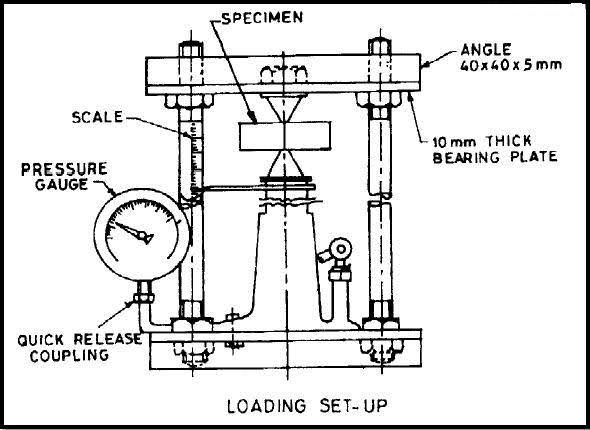
Significance of This Test
The point load strength index (PLSI) of rocks is an important parameter in rock mechanics and geotechnical engineering. It is a measure of the rock strength in terms of the load required to break a cylindrical rock specimen of a certain size, usually 50 mm in diameter and 100 mm in length. The determination of PLSI is significant because it provides valuable information on the strength and toughness of rocks, which are essential parameters in various engineering applications, including:
1. Rock Excavation and Tunnelling: PLSI is used to predict the strength of rock masses, which is important in determining the required excavation and support systems.
2. Rock Slope Stability: PLSI is used to evaluate the stability of rock slopes and cliffs, which are critical in the design of highways, dams, and other infrastructure projects.
3. Mining and Quarrying: PLSI is used to determine the strength of rocks for the design of mining and quarrying operations.
4. Geotechnical Engineering: PLSI is used to determine the strength of rocks for the design of foundations, retaining walls, and other geotechnical structures.
In conclusion, the determination of PLSI is a crucial aspect in rock mechanics and geotechnical engineering as it provides valuable information on the strength and toughness of rocks, which is essential in various engineering applications.
This Indian Standard Covers
IS 8764 is an Indian Standard titled “Method for determination of point load strength index of rocks – First Revision”. It provides a standardized procedure for determining the point load strength index of rocks, which is a measure of the rock’s compressive strength.
The point load strength index is determined by applying a point load to a cylindrical rock specimen and measuring the maximum load that can be applied before the specimen fails. The point load strength index is then calculated from the maximum load and the size of the specimen.
The standard specifies the method for preparing cylindrical rock specimens, the procedure for applying a point load to the specimen, and the calculation of the point load strength index. The standard also provides guidance on the selection of the appropriate size of the rock specimens, as well as the number of specimens to be tested for each rock type.
IS 8764 is widely used in India and other countries for evaluating the strength of rocks in geotechnical engineering and rock mechanics applications. The point load strength index is used to classify rocks into different strength categories and to predict the behavior of rocks in various geotechnical applications, such as the stability of slopes, the design of underground tunnels and caverns, and the stability of rock foundations for buildings and other structures.
In conclusion, IS 8764 is a widely used standard for determining the point load strength index of rocks, and provides a standardized method for evaluating the strength of rocks in geotechnical engineering and rock mechanics applications.
Dr. Manoj Kumar Rajak
Scientist-D
Civil Engineering Department