

Here’s How the Indian Standard for Artificial Lighting System Plays Important Role in Optimizing Plant Growth
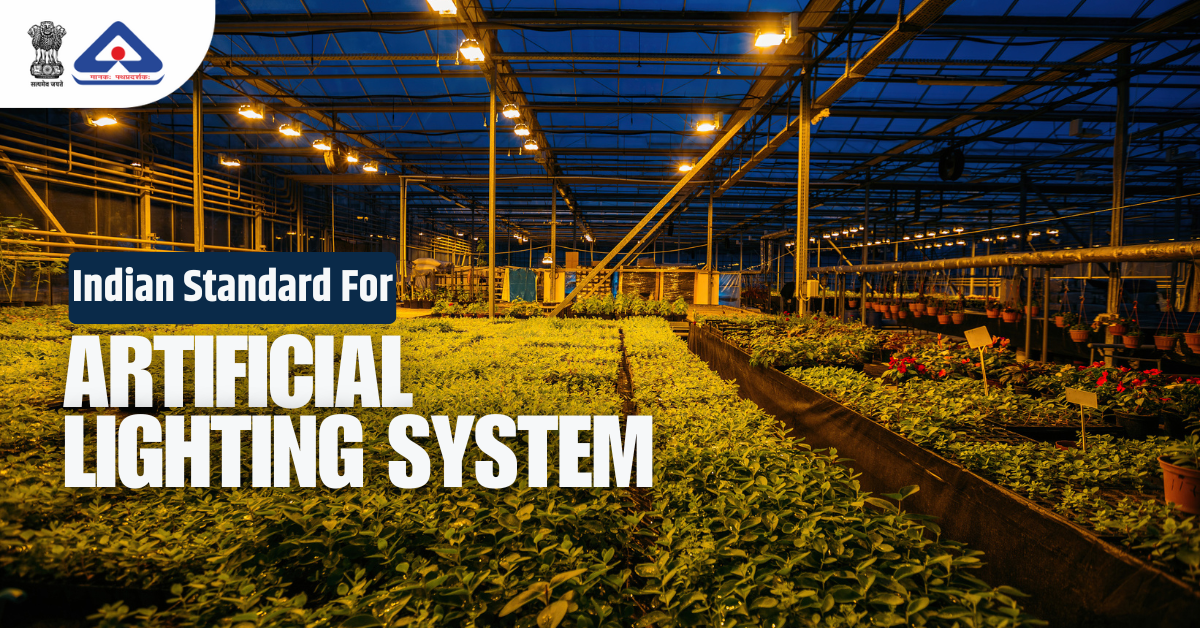
Artificial lighting for protected cultivation supplements natural sunlight to support plant growth. Plants rely on light for vital processes like photosynthesis, germination, and growth, with factors like light quality and intensity influencing flowering and overall development. In the modern world of agriculture, the ability to provide controlled environments for plant growth is revolutionizing the industry. In controlled environments, such as greenhouses, where natural light may be limited, artificial lighting ensures plants receive the necessary light for year-round growth. The use of artificial lighting in modern agriculture is essential for managing factors like light duration, temperature, and humidity, optimizing conditions for healthy plant growth and productivity in enclosed spaces.
Overview of Indian Standard IS 18807 for Artificial Lighting System in Protected Cultivation
IS 18807 provides comprehensive recommendations on the requirements for artificial lighting systems used in protected cultivation, the guidelines address several critical aspects:
1. Light Quality
IS 18807 defines light quality as the spectral distribution of light, crucial for photosynthesis, growth, and plant physiology. Red light enhances flowering and fruiting, blue promotes compact vegetative growth, green supports canopy photosynthesis, far-red regulates flowering and elongation, and UV triggers defense mechanisms. Each wavelength plays a distinct role in plant development, aiding optimal cultivation practices through tailored spectral lighting strategies.
2. Light Intensity
The standard highlights light intensity as a key factor influencing plant health and productivity, measured in PPFD (µmol m⁻² s⁻¹) and DLI (mol m⁻² day⁻¹). High intensity boosts photosynthesis, nutrient uptake, and morphological development, impacting flowering and fruiting stages. Accurate intensity control ensures plants receive adequate light energy for sustained growth, making intensity regulation a cornerstone of effective lighting systems under Indian Standard IS 18807.
3. Photoperiod
IS 18807 emphasizes the importance of photoperiod—light and dark cycles within 24 hours—in plant development. Short-day plants require longer nights to flower, while long-day species bloom under shorter nights. Day-neutral plants remain unaffected by photoperiod. This standard helps growers manipulate light duration to regulate flowering, dormancy, and vegetative growth, ensuring precise cultivation based on photoperiodic responses for diverse plant species.
4. Lighting Uniformity
Uniform light distribution is critical under IS 18807 to ensure balanced photosynthesis and growth. Proper system design prevents shadowing, hot spots, and uneven resource use. Uniform lighting enhances productivity, improves harvest quality, and facilitates controlled monitoring in indoor or controlled environments. This standard underscores the role of uniformity in maximizing yield and achieving optimal outcomes in modern horticultural practices.
Further, with the aim of providing guidance to concerned stakeholders, the standard also provides design recommendations for close canopy lighting system and top canopy lighting system.
If proper artificial lighting systems are used in protected cultivation, they can optimize plant growth by ensuring consistent light for photosynthesis, regardless of weather or season. This consistency not only supports healthy plant development but also increases yields by extending the growing season and enhancing productivity through precise light management. While adopting artificial lighting systems, it is important to ensure that the chosen systems meet the IS 18807 standards for optimal results.
Go Back