

Milk and milk products are part of the daily intake in many Indian families. Considered a complete food, milk offers many nutritional benefits. Keeping in mind how popular a food source it is, have you ever thought about checking the quality of milk you are having?
Despite of India being the largest milk producing country in the world, the consumption of adulterated milk is on the rise. Substances like caustic soda, detergent, paint, starch, formalin, urea, etc. are the adulterants used in milk these days, many of which are highly injurious to your health.
Never thought of it, did you?! Well, today’s a good day to change that. Here is what you should know as an informed milk consumer in India:
BIS Standards
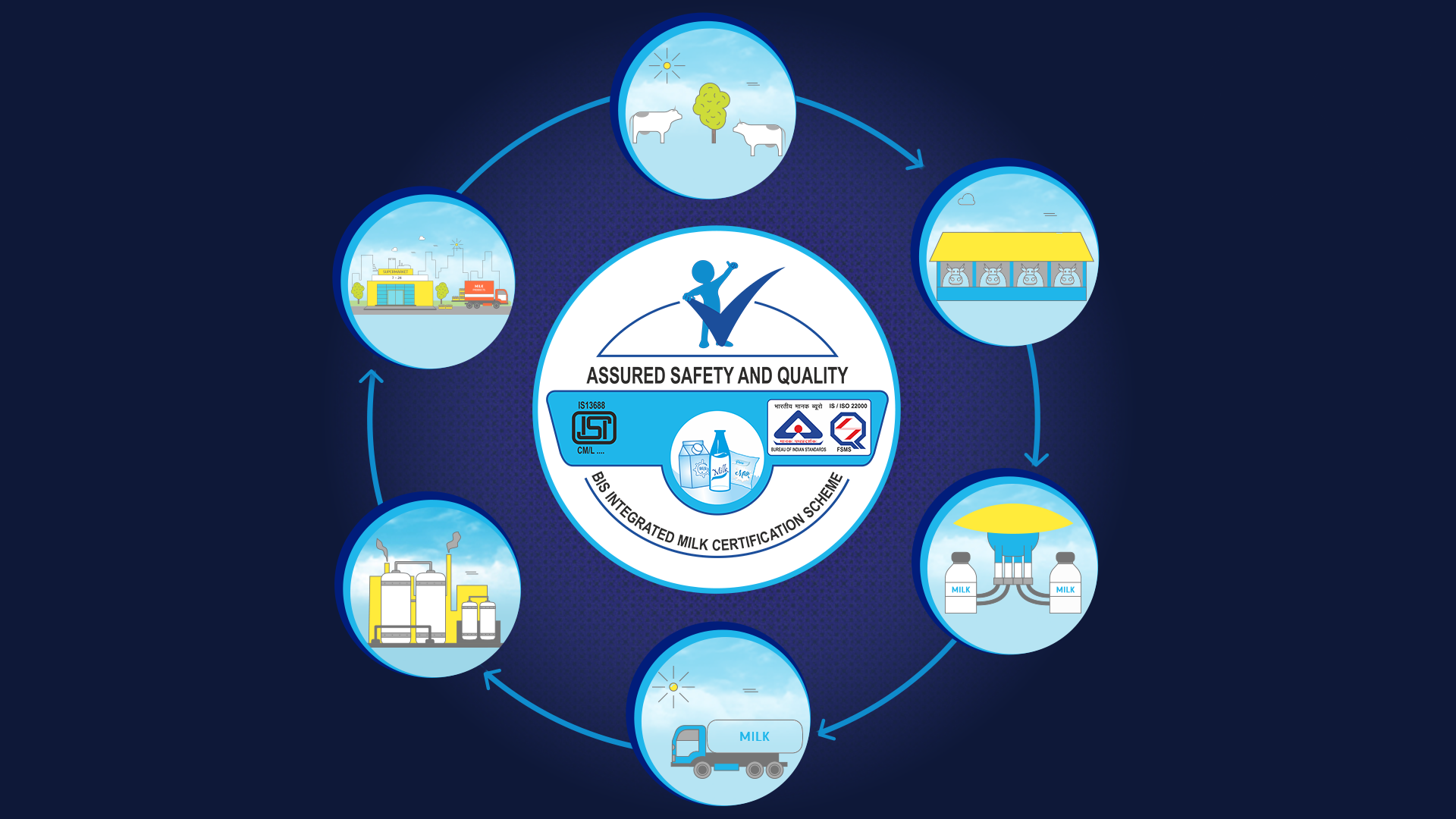
In view of the situations of unhygienic and adulterated milk, BIS has introduced Integrated Milk Certification Scheme as per IS 13688 along with IS/ISO 22000.
Milk certification
As per reports, 68.7% of milk and milk products do not follow FSSAI standards. For overcoming such a challenge, it is critical that a risk analysis is done. The milk’s journey from production to consumer has no current certification scheme in place for milk and milk products. That is why BIS plans to implement a joint certification scheme for milk and milk products i.e. System and Product certification. This certification factors in the short shelf life and perishable nature of the product along with the cold chain that forms a part of milk processing.
The objective is to integrate all management system certification, regulatory audits and products into one certification scheme i.e. the One Dairy One Certification. Such an approach benefits both the consumers and industry, and works towards maintaining hygiene, safety, and quality.
*FSSAI – Food Safety and Standards Authority of India
Integrated scheme
Milk being a perishable product is impossible to store for a larger time period. Since milk is to be consumed within a time-frame of 48 hours, its safety can be ensured if the system is followed correctly from the start to the end (the time of its delivery).
Together, FSMS license and BIS product certification can ensure the elimination of a level of risk in the milk’s wholesomeness and safety. To meet the system, product, and regulatory requirements, the Management System Certification and product certification integration aims to spread the ISI mark to the dairy sector as a whole.
Starting from the farmer level to retail, the certification license grants the usage of ISI on pasteurized milk pouches with FSMS license for the organization’s Food Safety Management System.
Additional note: In the domain of milk and milk products, BIS has articulated 36 standards from which 9 are compulsory. For pasteurized milk, the standard IS 13688 is followed. Also, the product certification mark provides assurance of the third party to the consumers.
What you should do
Here are certain things you can do as a consumer:
Certification Mark Logo

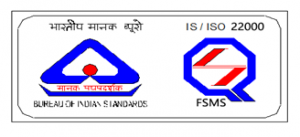
The symbol or logo of the certification mark of milk and milk products depicts that the unit has carried out the process according to the quality management system and food safety for the production of milk and milk products (according to the fixed quality parameters).
BIS licenses the primary milk and milk products producers in manufacturing premises that conform to the required Indian standards, and whose food safety management system complies with IS/ISO 22000.
Staying abreast with the latest standards that are being formulated in relation to milk and milk products, and what you must do on your part to ensure safety while consuming milk and milk products, is as crucial as it sounds. Hence, as a responsible milk consumer, make sure you take heed.

Written By: U S P Yadav, Scientist ‘F’ and Head MSCD
Go Back