

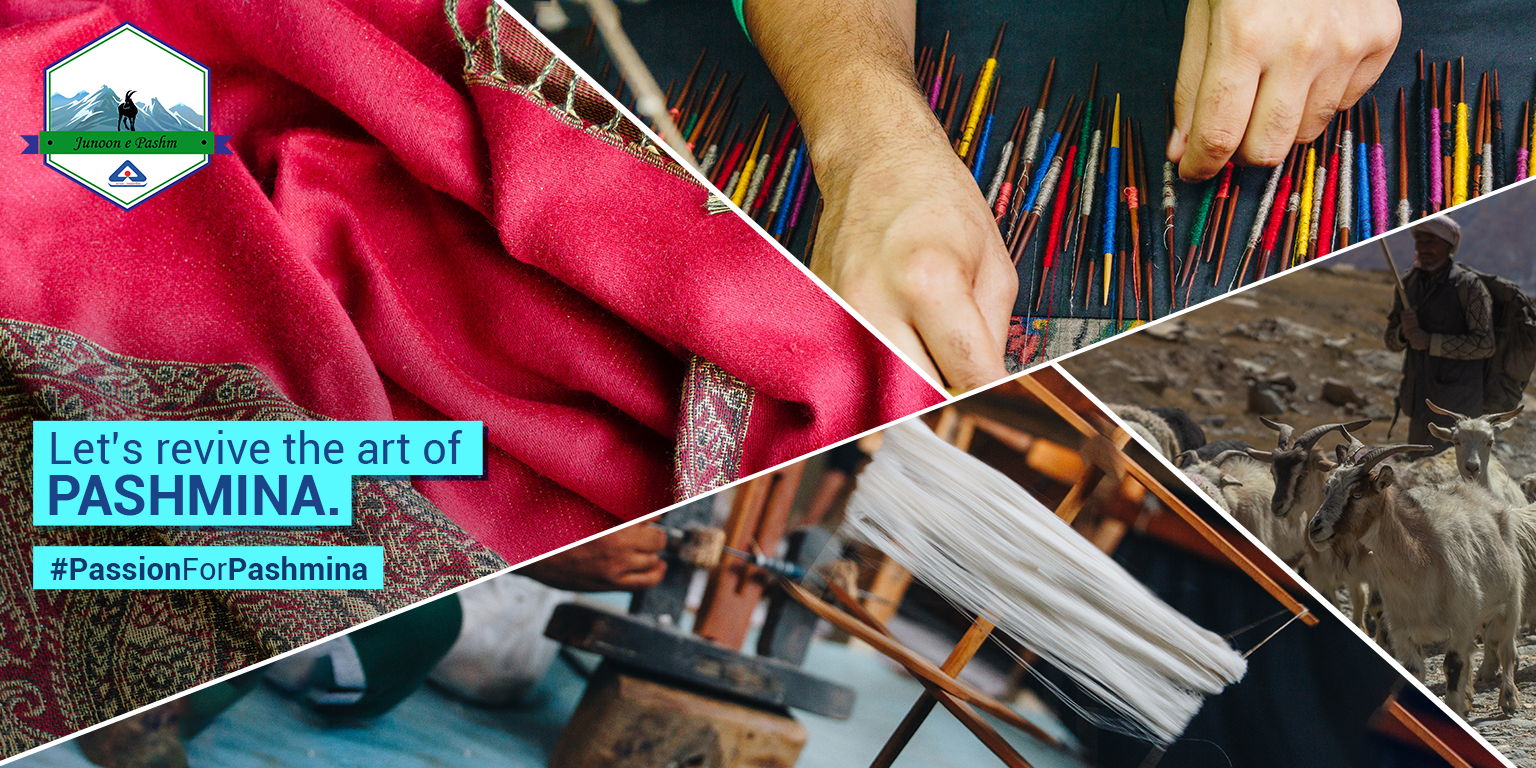
Recognized as one of rarest and the finest of fabrics, Pashmina has fans not just in India, but all across the globe. Obtained from different breeds of mountain goats found in the Changthang Plateau in Tibet and parts of Ladakh, in the Himalayan regions of India, Pashmina refers to a fine type of wool.
Even though both sheep wool and Pashmina are protein fibers, the latter has some distinct characteristics that set it apart and gives it superiority over the rest. The softness and warmth of Pashmina wool make it much more expensive than other varieties of wool. Chegu from Himachal Pradesh, Malra from Kargil region, and Chyangara from Nepal are certain types of goats that Pashmina comes from.
The Pashmina industry is worth 2000 crores, employing nearly 2 lakh people. The economy of Jammu and Kashmir mainly depends on this industry. Pashmina yarn costs roughly around INR 10,000 per kilogram.
These costs won’t be as near as the low prices in a Woolworths Catalogue.
The Difference
The finest quality of raw Pashmina in the entire world comes from Pashmina goats in Ladakh. With a global supply of less than 1%, this is a rarity in every respect. Pashmina from the Changthang region in Ladakh, located 3000 to 5000 meters above sea level, which is where the majority of Indian Pashmina is produced, is known for its fineness which is between 12.5-14 microns.
The best fiber from China, which is the largest producer of Pashmina across the globe, has a micron count of 15. Generic cashmere fibers, on the other hand, have a fineness (fiber diameter) ranging between 15 to 19 microns.
Threats faced by the Pashmina industry in India
The burgeoning, unregulated power looms across the country and outside are posing a big threat to the traditional persona of the Pashmina industry. The traditional process of producing Pashmina where the maximum portion of the task is performed manually is a time-taking and tedious process. Where it takes more than a month to create a handmade shawl, machines or power looms produce one shawl every fifteen minutes.
Huge demands for Pashmina along with comparatively slower production and high price ranges have naturally paved the way for power looms and imitations. Although power looms speed up the production process, they end up compromising on the quality of real Pashmina.
The lack of awareness regarding GI (Geographical Indication) labeling by PTQC (Pashmina Testing and Quality Certification Centre) has led to an increase in faux Pashmina products in the market and reduced the credibility of the industry as a whole.
Power loom spinning and manufacturing can be held accountable for the increasing instances of fake Pashmina. Various traders even blend different fabrics to Pashmina to enable the product to survive power loom vibrations.
Another major bane of power looms in the Pashmina industry is that they have rendered lakhs of artisans unemployed.
Standard for the Identification of Pashmina
To help restrain the practice of adulteration of Pashmina products, and safeguard the heritage and culture of Pashmina produced in Leh and Ladakh, the Bureau of Indian Standards (BIS) has formulated an Indian Standard IS 17269 : 2019 – Identification, Labeling and Marking of Pashmina Products.
This standard applies to raw fiber, yarn, sliver, processed/dyed fabrics and finished products made out of:
Furthermore, BIS is exploring for a faster method for the identification, marking and labeling of Pashmina products through the use of Artificial Intelligence (active element signature technology). Such a conformity assessment scheme based on the above method could aid the cause of genuine Pashmina products and shall benefit the local artisans and other stakeholders as well.
Other flaws and the way ahead
Upon delving deeper, one is bound to notice the various shortcomings that are ailing the Pashmina industry in the nation at present. Pinpointing some of the major flaws that are resulting in a significant setback faced by the industry would include –
In addition to the above, since Pashmina is exported to different parts of the globe, the business comes under the purview of international patenting norms which makes it even more vulnerable.
All of the above clearly hints that a lot more work needs to be put in to truly uplift the long-established Pashmina industry in India. Stakeholders need to get in touch with weavers and artisans who actually lie at the bottom of the chain. Better schemes have to be introduced for educating the poor artisans about their rights and the improvements that have been brought about in the industry for their aid. At the same time, strong measures have to be taken against fake Pashmina production.
Bringing in the top global fashion houses into the process of standardization of Pashmina is also one of the steps that could aid the promotion of BIS labeling and marking of Pashmina.

Written By: J K Gupta, Scientist ‘D’ Textiles
Go Back
Comments
Title : One thought on “Pashmina – Telling the Real from the Fake”
Great work done by BIS for upliftment of Pashmina Industry by introduction of Standards.