

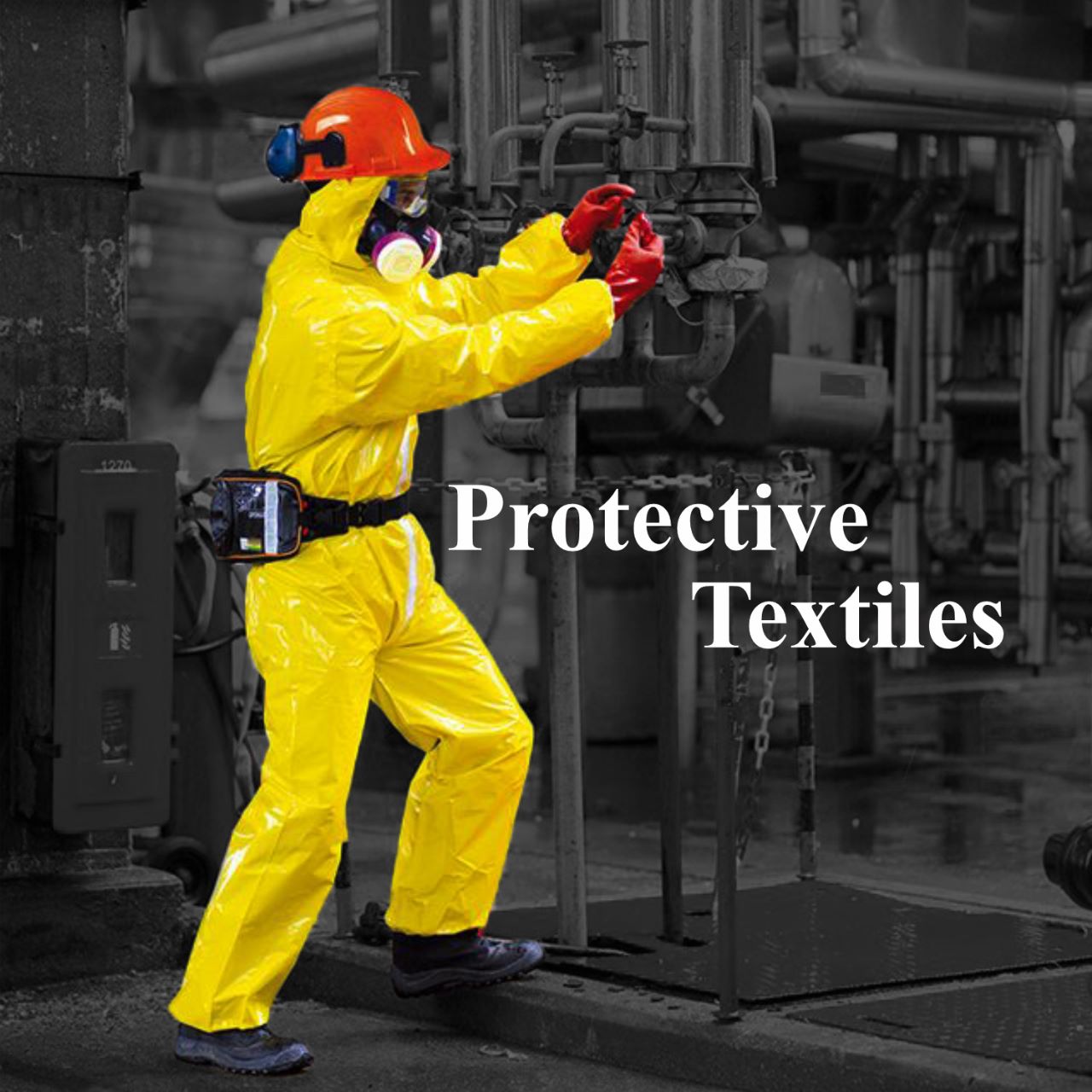
Protective technical textiles are specialty textiles that provide protection to wearers in hazardous situations like fire and heat, chemical exposure, ballistic protection, and other extreme atmospheric conditions. The main products include FR fabrics and apparel, protective clothing and gloves for industrial workers and fire fighter, Bullet Proof jackets, vest, Helmets & Patkas, Chemical protective clothing, High altitude clothing, Industrial gloves etc.
Standards for Protective Textiles at National Level are being formulated by the Textiles Protective Clothing Sectional Committee, TXD 32 with a mandate to formulate Indian Standards for testing and specification for textile protective clothing for protection from fire and other health/life hazards.
1. IS 17051-2018 Bullet Resistant Jacket
Bullet-resistant jackets are a type of protective clothing that provides protection against ballistic threats like bullets and other ammunition. BRJ aids in the absorption of impact and the prevention of bullet penetration from small arms or rifle rounds. It proves to be an important tool for protection against a number of small-arms threats. The Indian military and security forces face a number of small-arms threats. It is important to set minimum performance requirements for bullet-resistant jackets.
In order to ensure the safety of our soldiers and security forces, BIS has published a standard on BRJ, which is IS 17051:2018. This standard prescribes the minimum performance requirements of bullet-resistant jackets for protection against small arms and ammunition for six different threat levels, along with procedures for their evaluation.
2. IS 15809: 2018 high visibility warning clothes specification (first revision)
High visibility warning cloth is one of the items of personnel protective equipment worn to provide a visual signal of the wearer’s presence and is intended to provide conspicuity of the wearer under any light conditions by day and under illumination by vehicle headlights in the dark. BIS has published a standard, IS 15809:2018, which specifies the requirements for coefficient of retroreflection, minimum area of visible material, colour fastness, etc. It also specifies methods of testing for high visibility warning clothing as well as recommended configurations of the materials.
3. IS 16890: 2018 Textiles—Protective Clothing for Firefighters—Specification
The role of firefighters is very extensive in our society. Firefighters not only play a pivotal role in saving human lives during fire accidents but also save properties from extensive damage by extinguishing hazardous fires.
BIS has published a standard on protective clothing for firefighters, which is IS 16890:2018. This standard specifies minimum requirements for protective clothing to be worn during firefighting and associated activities like flame resistance, heat transfer (flame exposure), heat resistance, residual strength when exposed to radiant heat, etc. It also covers the general clothing design and the methods of testing for determining these performance levels.
4. IS 15748:2022 Protective clothing: clothing to protect against heat and flame; minimum performance requirements (first revision)
This standard is applicable to protective clothing for industrial workers exposed to heat (excluding firefighters’ and welders’ clothing). This standard specifies the performance requirements for limited flame spread, conductive heat, radiant heat, molten aluminum splash, etc. It also specifies the methods of testing the protective clothing materials and gives design recommendations for the clothing where necessary.
Written by:
Shri J K Gupta, Scientist E & Head Textiles
Shri Mayur Katiyar, Scientist B, Textiles