A brief on IS 1:1968 ‘Specification for the national flag of India (cotton khadi ) (Second revision)’
The National Flag of India is a horizontal tricolour of deep saffron (kesaria) at the top, white in the middle and dark green at the bottom in equal proportion. The ratio of the length of the flag to its width is 3:2. In the centre of the white band is a navy-blue wheel which represents the chakra.
The top saffron colour indicates the strength and courage of the country. The white middle band indicates peace and truth with Dharma Chakra. The green shows the fertility, growth and auspiciousness of the land.
The design of the Ashoka Chakra is that of the wheel which appears on the abacus of the Sarnath Lion Capital of Ashoka. Its diameter approximates to the width of the white band and it has 24 spokes. The Ashoka Chakra shall preferably be screen printed, or otherwise printed or stencilled or suitably embroidered. In all the cases, the Chakra shall be completely visible on both sides of the flag in the centre of the white panel.
The design of the National Flag was adopted by the Constituent Assembly of India on 22 July 1947, and as decided by the Govt. of India, the First National Standard on National Flag was published as IS 1 in 1951 by National Flag Sectional Committee of ISI. This standard was then revised in 1964 with a view to completely change its dimensions in metric system subsequent to its adoption by the Government of
- The details of yarn for warp and weft of cotton khadi bunting and of cotton khadi duck were deleted.
- The dimensions of hemp cordage and those of wooden toggles used for different sizes of flags were amended.
- The pH value of the aqueous extract of bunting and tolerances on the dimensions of the flag and Ashoka Chakra were prescribed.
This Indian standard (IS 1:1968) prescribes the design, constructional details and other particulars of the National Flag of India made of hand-spun and hand-woven cotton khadi bunting. This standard specifies 9 different sizes of National Flags depending upon the length and width of the National Flag.
TEXTILES DEPARTMENT
Our Ref: TX08/T-1 11 March 2015
Subject: A brief on IS 1:1968 ‘Specification for the national flag of India (cotton khadi ) (Second revision)’
This Indian standard was first published in 1951 and then revised in 1964 with a view to complete change its dimensions in metric system subsequent to its adoption by the Government of India.
Subsequently, IS 1 was revised as IS 1:1968. In this revision, the following major changes were made:
1) The details of yarn for warp and weft of cotton khadi bunting and of cotton khadi duck were deleted.
2) The dimensions of hemp cordage and those of wooden toggles used for different sizes of flags were amended.
3) The pH value of the aqueous extract of bunting and tolerances on the dimensions of the flag and Ashoka Chakra were prescribed.
SCOPE – This standard prescribes the design, constructional details and other particulars of the National Flag of India made of hand-spun and hand-woven cotton khadi bunting.
DESIGN – The flag shall be rectangular in shape, and the ratio of the length to the width shall
be 3:2.
NOTE — However, if required for special purposes, flags having length to width ratio different from 3:2 may be made.
COLOURS OF PANELS: The flag shall be a tricolour panel made up of three rectangular panels or sub-panels of equal widths. The colour of the top panels shall be India saffron (KESARI), and that of the bottom panel shall be India green; the middle panel shall be white, bearing at its centre the design of Ashoka Chakra in navy blue colour.
FLAG SIZE – The finished sizes of the flags shall be as follows:
DIMENSIONS OF FLAG
| Flag size Number |
Length |
Width |
Tolerance, Percent |
| 1 |
6300 |
4200 |
±1.5 |
| 2 |
3600 |
2400 |
±1.5 |
| 3 |
2700 |
1800 |
±1.5 |
| 4 |
1800 |
1200 |
±1.5 |
| 5 |
1350 |
900 |
±1.5 |
| 6 |
900 |
600 |
±1.5 |
| 7 |
450 |
300 |
±1.5 |
| 8 |
225 |
150 |
±1.5 |
| 9 |
150 |
100 |
±1.5 |
ASHOKA CHAKRA — The Ashoka Chakra shall preferably be screen printed, or otherwise printed or stencilled or suitably embroidered with navy blue colour embroidery thread. In all the cases, the Chakra shall be completely visible on both sides of the flag in the centre of the white panel. Ashoka Chakra shall have 24 spokes equally spaced.
COMMENTS RECEIVED ON IS 1: 1968 – During the last meeting of Handloom and Khadi Sectional Committee, TX 08 on 31 July 2014, the committee scrutinized the comments received from M/s Khadi Dyers and Printers (KDP), Mumbai on IS 1:1968. After detailed discussions, the committee decided that draft revisions of IS 1:1968 be prepared by M/s Khadi Dyers and Printers (KDP), Mumbai in consultation with Shri J K Gupta from BIS after incorporating the above changes or any other editorial changes as decided in the earlier meeting also. The draft revision so prepared to be issued in wide circulation for eliciting technical comments. The comments received are mainly:
a) Tolerances on the dimensions and linear density of hemp cordage
b) Tolerance on dimensions of hemp loop
The National Flag of India is a horizontal rectangular tricolour of
deep saffron,
white and
India green; with the
Ashoka Chakra, a 24-spoke wheel, in navy blue at its centre. It was adopted in its present form during a meeting of the
Constituent Assembly held on 22 July 1947, when it became the official flag of the
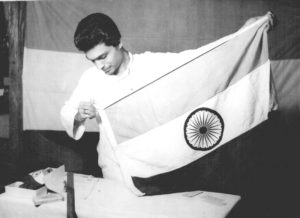
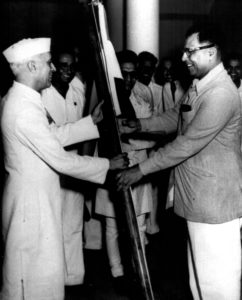
Dominion of India. The flag was subsequently retained as that of the Republic of India. It was Pt. Jawahar Lal Nehru, the first Prime Minister of India, who wished to have first Indian Standard on National Flag of India (Cotton Khadi).
Bhagwa or the saffron colour denotes renunciation of disinterestedness. The white in the centre is light, the path of truth to guide our conduct. The green shows our relation to (the) soil, our relation to the plant life here, on which all other life depends. The “Ashoka Chakra” in the centre of the white is the wheel of the law of
dharma.
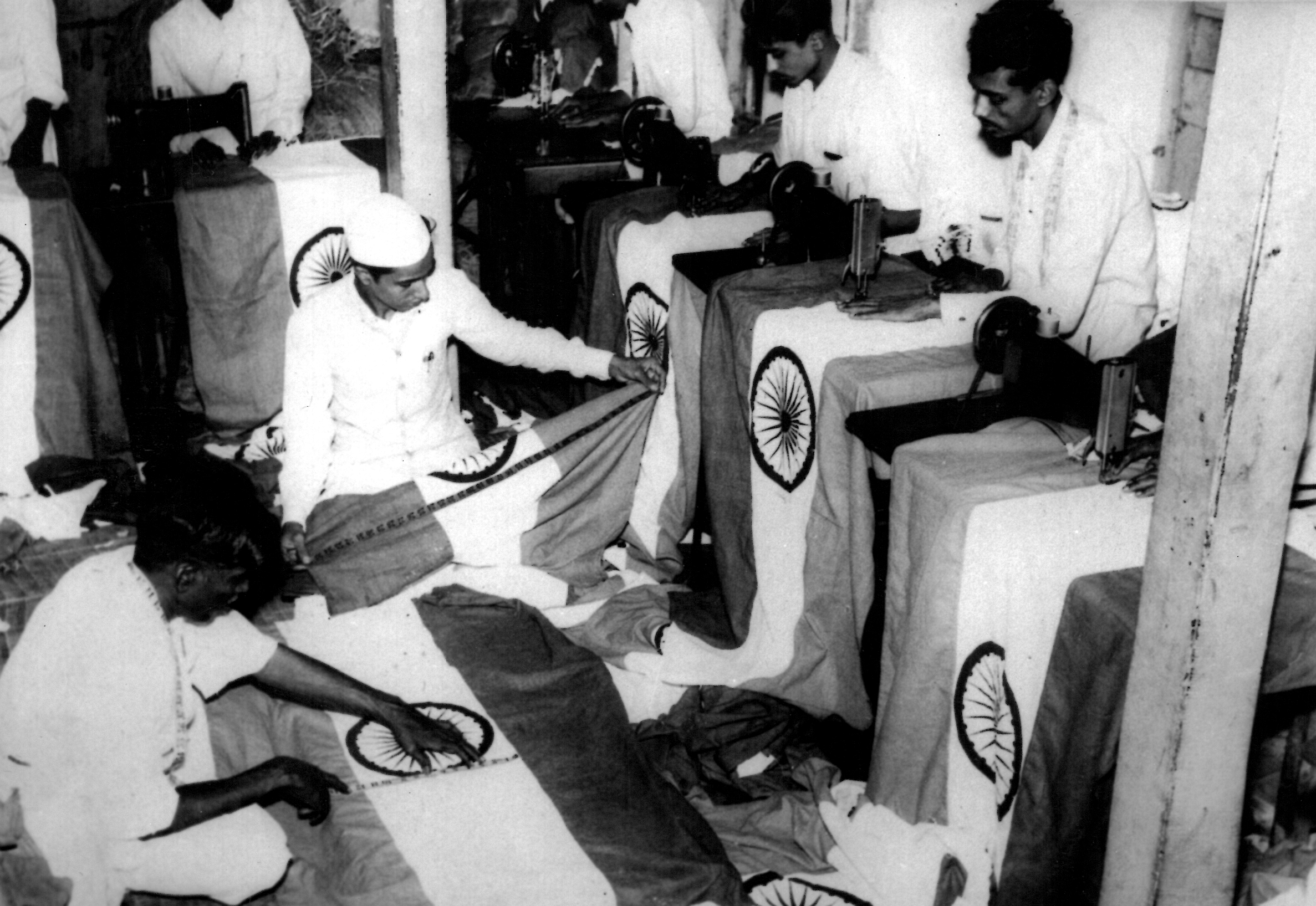
DESIGN- National Flag of India is manufactured from Hand spun and hand woven cotton khadi cloth. The flag shall be rectangular in shape and ratio of the length to the width shall be 3: 2.
COLOURS OF PANELS – The flag shall be a tricolour panel made up of three rectangular panels or sub-panels of equal widths. The colour of the top panels shall be India saffron (KESARI), and that of the bottom panel shall be India green; the middle panel shall be white, bearing at its centre the design of Ashoka Chakra in navy blue colour.
ASHOKA CHAKRA — The Ashoka Chakra shall preferably be screen printed, or otherwise printed or stencilled or suitably embroidered with navy blue colour embroidery thread. In all the cases, the Chakra shall be completely visible on both sides of the flag in the centre of the white panel. Ashoka chakra shall have 24 spokes equally spaced.
Written By: J K Gupta, Scientist ‘D’ Textiles
Go Back



Comments
Title : 2 thoughts on “A brief on IS 1:1968 ‘Specification for the national flag of India (cotton khadi ) (Second revision)’”
Is this the first Standard formulated by BIS ? Please email me your answer.
long time no changed specification or revisions
may be considered as negligence
New time comes to think once again